
My travelling experiences showed me some very useful practices and examples, which I decided to share.
Garbage. In Tollegno, a very small village in the north of Italy, people are teaching their kids how to be sustainable each day. They collect the garbage selective, but what does this mean?
They have a special container for glass in each part of the village, where people go and throw the cleaned bottles by breaking them.
They have separate containers for oil, used batteries, appliances, even used medical items.
They come and collect the garbage in different days like this: one day they come to collect paper, another day plastic, and another the organic one. The most interesting part is not that they do that in different days, but, if you don't put them separate and correctly, they don't take it and you have to wait till next week, till you do.
Also, the entire village uses renewable energy.
Clothes and furniture. They do have containers where they encourage the donation of used clothes and you can find sites where they donate the furniture which is still good for use.
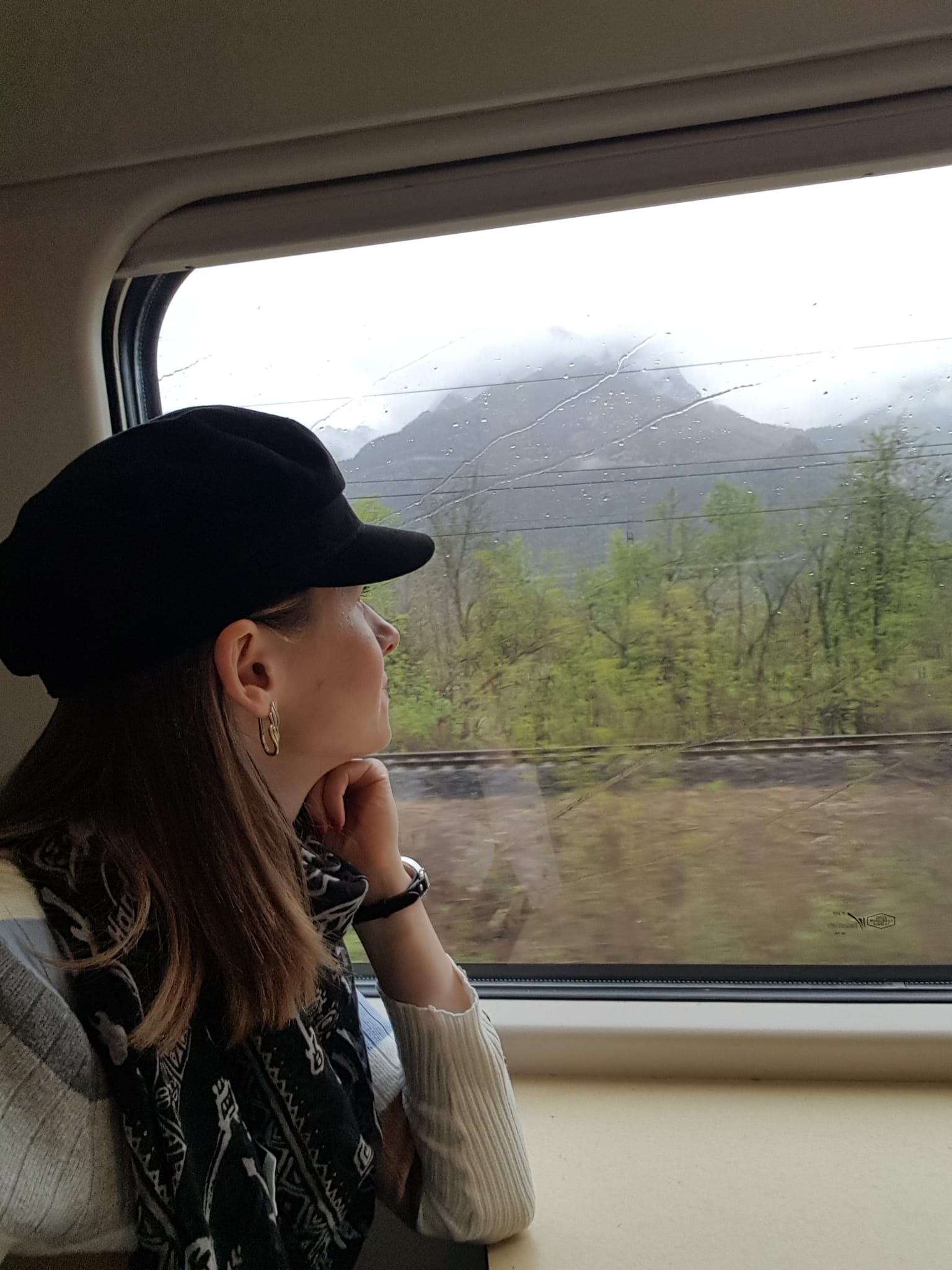
Trains. In Italy I traveled for the first time with trains that use hydrogen. These are often used on short distances and what can I say, they are very comfortable and quiet. They do encourage travelling by train. I switched 4 trains and had time for two coffees between them. They come in time and if there is any problem, they have buses that replace them. You don't have to worry about not getting in time to your destination.
Cars. Well, in the north part of Italy they already use hybrid and electric cars mostly.
Silence. I do have a problem in Romania when it comes to noise and the way people behave. In Italy, cars don't honk at all. I've been in two situations when I didn't see the car behind me, and they just waited for me to step aside.
Land. The most impressive thing I saw was when I took train from Stresa this year to go to Geneva. I was impressed of the way in which every particle of land was worked, as if someone had drawn with a ruler. I never seen something similar and you have to take in consideration that this was not in the plain or hill where the land is fruitful, but between the Alps.
Forests. When it comes to do sustainable actions, most companies go and plant trees. I don't say it's a bad thing, but those trees will have their effect in the future and we need something to be done now. We need to stop cutting the old forests, as it's a known fact that they play the biggest role in carbon storage, wildlife habitat, species diversity.
Water. In pandemics, I lived almost an year between Bucharest and Constanta and I spent most time at the Black Sea beach. We need to do more when it comes to beaches, the way we clean them and the way we take care of the sea. This year I have been to Gaeta, in south Italy. I can't tell you how the sand was looking and feeling: just like a blanket under my feet, without shells and with a very cleaned water.
Public places, like parks and lakes. I don't think I need to tell you that cleaning public places and lakes is a must for sustainability and not only. You can't speak about sustainability without it. Also, we need to make people understand the importance of more green places, more trees planted.
Streets and buildings. If you want to talk about sustainability, we have to talk about how the streets and buildings are restored. I have seen many buildings in west that are restored, they do use a lot of plants and renewable energy to raise the quality of air.
Food. Well, it's my favorite part, because I have seen things done on a totally different level. If you do collect correctly, then you can also do another thing correctly, such as packaging food. In Italy, food looks incredibly fresh, very well packed. There is no such thing as spoiled food or vegetables. They pack the food in multiple ways, so that population can buy as much as they need: you can find the meat in large quantities or in portions for just one or two persons, all the vegetables are packed or kept at cold, so they can resist more, you can find very diverse cooked food, already packed. You don't have to know to cook that well, because they make it very easy for each type of person. And the quality is high.
This being said, I will let you jump into conclusions. I hope this article will serve for better practices and for a truly sustainable life.