
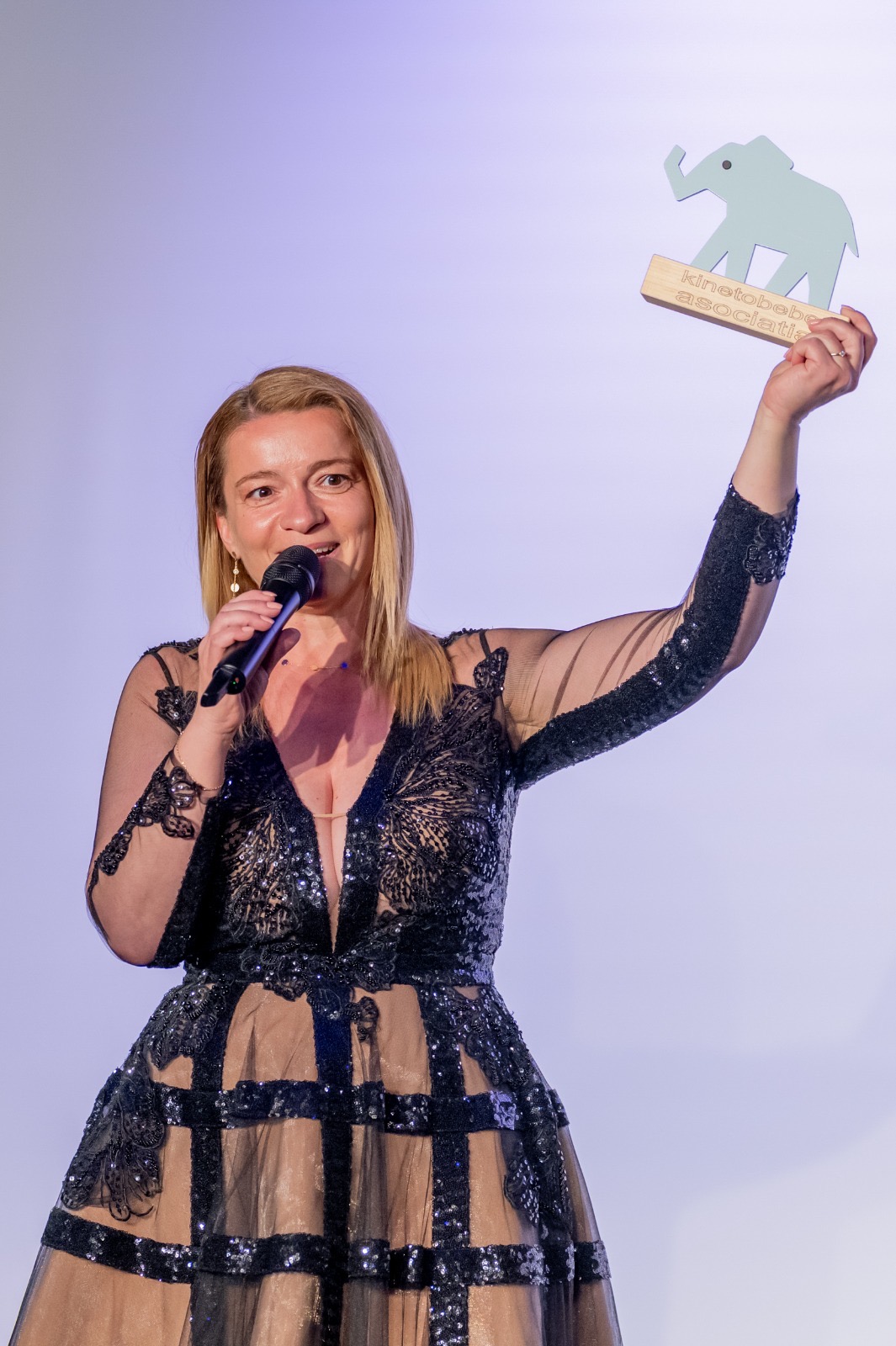
Ana-Raluca Acatrinei is an entrepreneur, economist by profession, leader and founder of KinetoBebe, the first private pediatric rehabilitation center in Romania. A pioneer in pediatric rehabilitation and social entrepreneurship, she is a woman who transformed a vision into an impactful initiative, making a meaningful difference in the lives of thousands of children and families.
After beginning her career in finance, working at a bank and the Frankfurt Commodities Exchange, Raluca chose to return to Romania in 2003, driven by the desire to build something truly meaningful. She went on to work in investment management and healthcare management consultancy, and in 2009, she laid the foundations of a project that would contribute to the development of private pediatric rehabilitation in Romania.
Over more than 16 years of activity, KinetoBebe has grown into a network of four rehabilitation centers, supported by a team of 45 specialists and serving more than 4,000 children every year. Through its social programs, thousands of children from vulnerable families have gained access to therapy, assessments and experiences that can change the course of their lives.
Beyond developing the organization, Raluca has initiated projects with a significant impact on education and prevention, including #StaiDrept (StandTall), Romania’s first program dedicated to preventing incorrect postural habits among primary school children, and “Bucharest Belongs to Them Too”, an initiative providing children with disabilities and those from vulnerable backgrounds with access to cultural, educational and social experiences. She also launched Primii2Ani (The First 2 Years), a platform designed to inform parents and help them follow their children's physical and cognitive development during the first two years of life.
In this interview for Strong Women, Ana-Raluca Acatrinei reflects on purpose, courage, resilience and the responsibility of building something that truly matters. She speaks about the strength it takes to open new paths where no examples exist, the difficult choices between career and family, leadership grounded in respect and the lessons learned through times of crisis.
It is a conversation about a form of power that does not seek recognition, but creates opportunities. About the ambition to change mindsets and the belief that every child deserves a chance.
And if she could define the legacy she hopes to leave behind, Raluca would want to be remembered through the thousands of children who took their first steps in KinetoBebe's therapy rooms, and through the people she left stronger.
1. What truly drives you every day beyond success and recognition?
The families who are waiting for us. Every day, children walk into the KinetoBebe centers for whom therapy is not optional, but the only path to an independent life. And behind them are parents who fight every single day so that their child can have a childhood like any other.
I am also driven by the people on my team. Dozens of families depend on how I run this organization, and that responsibility gets me up in the morning and, sometimes, keeps me awake at night, searching for solutions.
And there is something more: the mindsets I still want to change in Romania, about children with disabilities and about prevention.
2. What does it truly mean to be a powerful woman today and how is that different from simply being strong?
Being strong means enduring. Carrying the weight, not giving up. Many women in Romania know this very well.
Being powerful means turning what you have carried into something that lasts beyond you. When I returned to Romania for good in 2003, I wanted to leave something behind, to matter.
To me, power is the ability to build a road that had not been travelled, as pediatric rehabilitation in the private sector was in 2009, and to bring others along on it: therapists, parents, partners, sponsors.
3. What is a value you have never compromised, even when it cost you something important?
Respect for people. I have learned that KPIs, budgets and profit are only the visible part of success. The invisible part is how you honor your family and the people you work with. You can build quickly by “stepping over bodies,” but it does not last, and the hidden costs always come with it.
I felt this most clearly in the first five years of the center, when I had offers to sell KinetoBebe. It was the easier and safer road. I said no, because I did not want to hand over a project built for children and for the people on my team. I chose to grow, with all the risk and effort that came with that choice.
4. What has sustained you in your most difficult moments internally, not externally?
My positive way of thinking. Not a naive optimism that pretends the problem isn’t there, but the conviction that every situation, however hard, has a way out, and that my job is to find it. In every crisis there is also an opportunity for growth. If you stay in the role of the victim, you can lose everything.
For me, positive thinking is a daily discipline: you choose where to put your energy, and you look at what you can do today, not at what you lost yesterday. I see the same thing in the children at our centers, where every small but essential step forward matters. I also believe strongly in what I call spiritual intelligence in business, even though it is often underestimated or forgotten.
5. Looking back, who shaped you more in critical moments: a man or a woman, and how?
Honestly, neither, in the classic sense. In critical moments I never looked for a shoulder to cry on. I looked for the best professional for the nature of the problem, whether it was law, finance or medicine, and I learned from them how to solve the situation itself. For me, who shaped me is not a matter of gender, but of competence and of a person’s willingness to teach me.
Beyond that, I have learned enormously from the team I build with every day, and from the children and families we work with: patience, resilience, meaning.
And gardening, which connects me to my grandparents, has shown me that valuable things grow with time, care and consistency.
6. What mindset shift is essential for young girls who want to become truly powerful women?
To understand that diplomas matter less and less, and the person matters more and more. When I meet someone young, I am interested in how they think, how they react when things get hard, how they get over a failure, and what their dreams are.
I would tell girls to learn autonomy, resilience and empathy early on. The job market changes as we go, and power comes from the ability to adapt without losing yourself.
7. What is the most defining lesson you’ve learned specifically as a woman navigating power?
That the balance between career and family is always fragile. Like any woman in Romania who wants to excel in her profession while also being present at home and in her own life, you always lose something: some of your health, some time with your loved ones, some time for yourself.
The lesson is not that you can have it all perfectly, but that you have to learn from every choice you make.
8. How do you face self-doubt or fear when the stakes are high and what should other women understand about those moments?
My hardest moment was the pandemic, when our centers had to close. Overnight, I had to learn in real time everything about legislation, economics, social protection and hygiene regulations in order to save the centers. I had no manual and no example to follow. It was a time without the support of artificial intelligence, and our Facebook page was still in kindergarten.
Fear does not disappear in moments like these, but it is not a sign that you are on the wrong path. What I would tell other women: don’t wait until you know everything before you act. Learn as you go, ask the best specialists for help, and take the next step, even if it is a small one. Coming through the pandemic crisis hardened us for everything that came after.
9. If you could offer one piece of advice to help Strong Women grow into a truly impactful international initiative, what would it be?
Stay anchored in real stories and turn them into measurable action.
From my experience with KinetoBebe, I have learned that lasting impact comes from a sustainable model, not just enthusiasm: our day-to-day activity is supported by our own resources, while sponsors come in for special projects.
An international initiative needs the same stability and partners who believe in it for the long term.
10. When your journey is complete, how do you want your power, not just your success to be remembered?
I would like to be remembered through the thousands of children who took their first steps in our therapy rooms, and through the independent adults they will become. Through having shown that health and longevity begin in the first years of life, and that a child with disabilities also has a place on an opera stage.
And if someone says of me that I built patiently, like a garden, and that I left the people around me stronger than I found them, that will be the power I hope for.